
Colored PPF vs Vinyl Wrap: What Shops Should Offer in 2026
For many automotive film shops, the line between paint protection and vehicle styling is becoming less clear.
A few years ago, the service menu was simple. Customers who wanted paint protection chose clear PPF. Customers who wanted a new color chose vinyl wrap.
In 2026, colored PPF is changing that conversation.
Colored paint protection film gives customers a way to change the appearance of a vehicle while adding a protective layer against road debris, light scratches, and daily driving wear. Vinyl wrap remains one of the most flexible solutions for color change, commercial graphics, accent styling, and short-term customization.
For shop owners, the real question is not simply which film is better.
The better question is:
Which service fits the customer, the vehicle, the budget, the installer skill level, and the shop’s profit model?
This question matters because both markets are growing. Fortune Business Insights reports that the global automotive wraps films market was valued at USD 4.26 billion in 2025 and is projected to reach USD 19.41 billion by 2034. Grand View Research reports that the global paint protection film market was valued at USD 502.55 million in 2024 and is projected to reach USD 726.63 million by 2030.
These numbers show that customers are still investing in both appearance customization and paint protection. However, shops need a smarter way to position each service.
For PPF shops, wrap shops, tint shops, and detailing businesses, colored PPF and vinyl wrap should not be treated as direct replacements.
They are different tools for different customer needs.
The most successful shops will understand the difference, explain it clearly, price it correctly, and build a service menu that protects profit instead of creating confusion.
What Is Colored PPF?
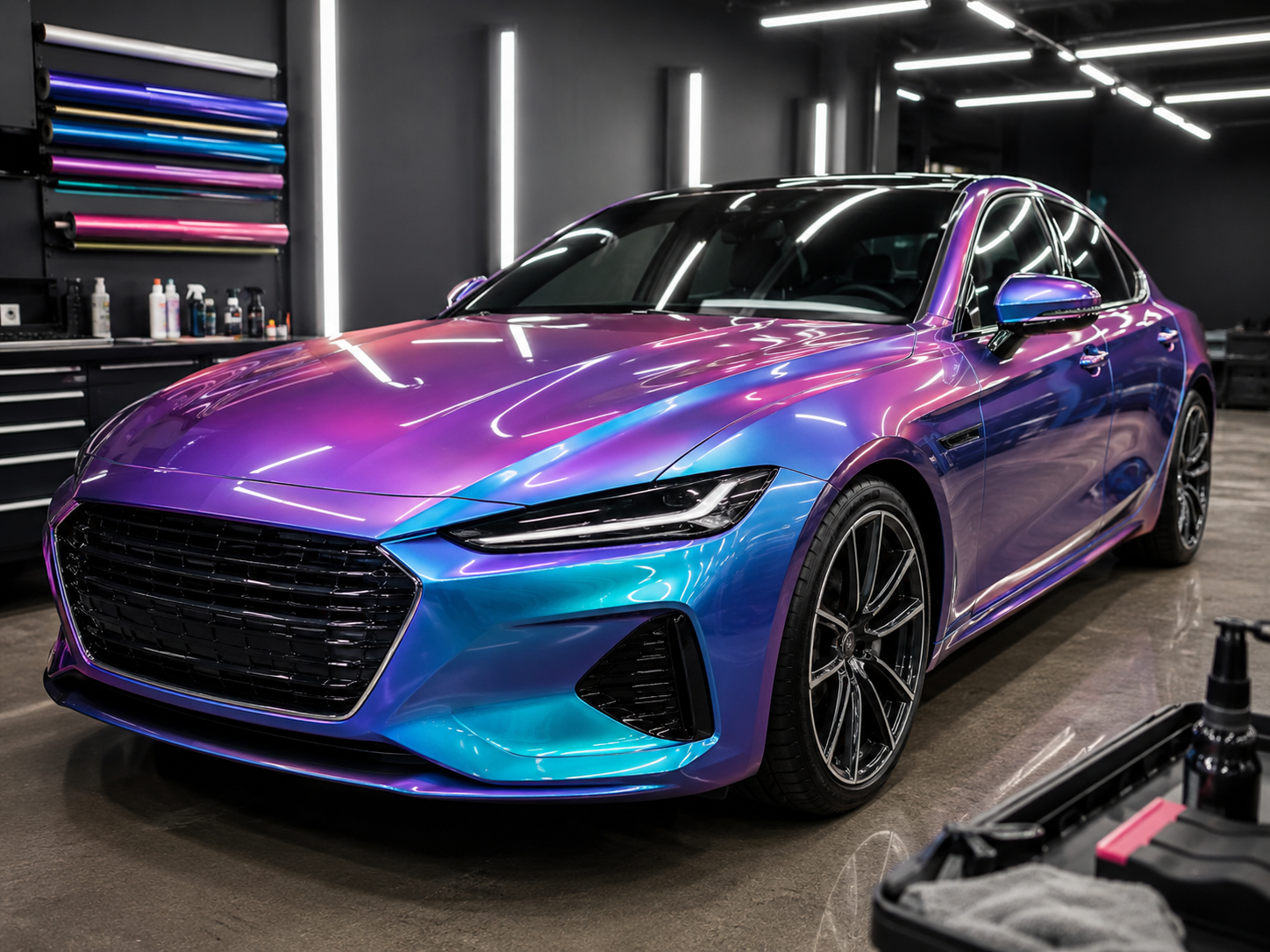
Colored PPF is paint protection film with color, finish, or visual effect built into the protective film layer.
Traditional clear PPF is designed mainly to protect the original paint while staying visually transparent. Colored PPF goes one step further. It changes the appearance of the vehicle while still offering paint protection benefits.
In most cases, colored PPF is thicker and more impact-resistant than standard vinyl wrap. It is usually designed to help protect paint from stone chips, light scratches, road contamination, and normal driving exposure.
Many high-quality PPF products also include self-healing properties, which allow light surface marks to reduce under heat.
Common Colored PPF Finishes
Colored PPF may be available in gloss colors, matte colors, satin finishes, metallic effects, color-shifting looks, and fashion colors designed for premium or performance vehicles.
The available range depends on the film manufacturer, region, and distributor inventory.
For customers, the biggest appeal is simple. They no longer need to choose between color change and paint protection as two separate services.
For shops, this creates a higher-value service opportunity, especially for luxury cars, EVs, sports cars, and new vehicles where customers care about long-term paint condition.
Best Use Cases for Colored PPF
Colored PPF is usually best suited for:
→ New vehicles
→ Luxury vehicles and EVs
→ Customers who want both color change and long-term paint protection
It also works well for customers who want a premium finish but do not want to sacrifice the protective benefits of PPF.
From a shop perspective, colored PPF makes the most sense when the customer understands the value of protection, accepts a higher project price, and expects a long-term result.
It is not always the best option for a customer who only wants a low-cost temporary color change.
What Is Vinyl Wrap?
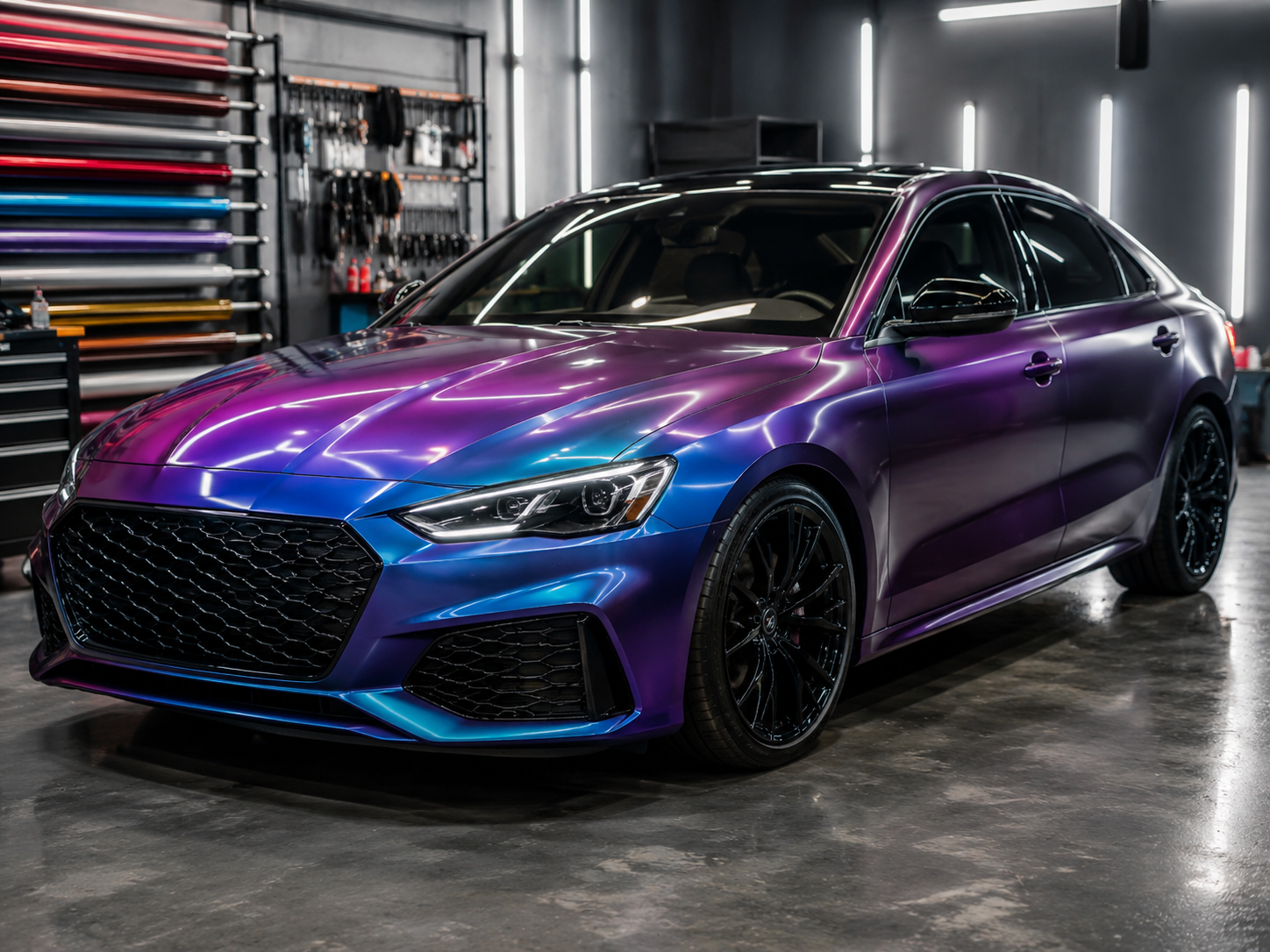
Vinyl wrap is a flexible decorative film used mainly to change the color, finish, or visual identity of a vehicle.
It has been widely used for full color changes, commercial fleet branding, roof wraps, racing stripes, accent panels, printed graphics, and promotional vehicles.
Vinyl wrap is generally thinner than PPF. It is easier to use for creative design work and is available in a very wide range of colors, textures, and finishes.
Avery Dennison, for example, describes its Supreme Wrapping Film as offering strong conformability around curves and recesses, along with a wide range of gloss, matte, metallic, pearl, satin, carbon fiber, and chrome options.
Best Use Cases for Vinyl Wrap
Vinyl wrap is ideal for customers who want visual customization, business branding, short-term promotional graphics, or a more budget-friendly color change.
It is also a strong option for customers who enjoy changing the look of their vehicle every few years.
For wrap shops, vinyl remains essential because it supports creativity. A commercial van, delivery fleet, show car, or promotional vehicle often needs graphics, logos, printed designs, and strong visual impact more than heavy paint protection.
In those cases, vinyl wrap is usually the more practical service.
Colored PPF vs Vinyl Wrap: Key Differences
Colored PPF and vinyl wrap are often compared because both can change the look of a vehicle. However, their purpose, cost, installation method, and customer value are different.
| Comparison Point | Colored PPF | Vinyl Wrap |
|---|---|---|
| Main Purpose | Color change plus paint protection | Color change, styling, branding, and graphics |
| Paint Protection | Stronger protection against stone chips, road debris, and light scratches | Light surface coverage, but not designed as impact protection |
| Material Thickness | Usually thicker than vinyl | Usually thinner and more flexible |
| Installation Difficulty | Requires PPF handling skill, tension control, and careful edge planning | Requires wrap skill, heat management, alignment, and post-heating |
| Design Flexibility | Growing color range, but usually fewer design options than vinyl | Very wide color, texture, print, and graphics options |
| Material Cost | Usually higher | Usually lower |
| Customer Price | Higher-ticket premium service | More flexible pricing for different budgets |
| Best Customer Type | Luxury, EV, new car, and long-term protection customers | Style-focused, budget-conscious, commercial, and short-term customization customers |
The key difference is value positioning.
Colored PPF is not simply a more expensive wrap. It is a premium protection product with a color-change benefit.
Vinyl wrap is not simply a cheaper version of colored PPF. It is a creative styling and branding material with broader design freedom.
Installation Difficulty: Which One Is Harder?
Colored PPF and vinyl wrap both require professional installation skills, but the challenges are different.
A shop that is good at vinyl wrap should not assume colored PPF will behave exactly the same. A PPF shop should also not assume that full-body colored PPF is identical to installing clear PPF on selected panels.
The installation method, risk level, film behavior, and customer expectation are different.
Colored PPF Installation Challenges
Colored PPF can be thicker and less forgiving than vinyl.
Stretching too aggressively may affect finish consistency, especially on complex curves, bumpers, mirrors, and deep body lines. Installers must control tension carefully because the final color and surface appearance are part of the customer’s main expectation.
Full-body colored PPF also requires strong planning around panel coverage, exposed edges, wrapped edges, and installation sequence.
A small error can be expensive because the material cost is higher. This is why shops should train installers before promoting full-body colored PPF aggressively.
Colored PPF requires both PPF installation skill and color-change planning.
Vinyl Wrap Installation Challenges
Vinyl wrap is often easier to reposition and more flexible for styling work. However, it still has its own risks.
Complex curves, overstretching, poor surface preparation, weak post-heating, and deep recesses can lead to lifting, shrinking, or visible failure over time.
Printed vinyl and textured vinyl require extra attention to alignment and visual consistency. A design that looks good on a screen can become difficult during installation if the panel shape, graphic alignment, or seam placement is not planned correctly.
Shop Workflow Insight
A shop moving from vinyl wrap to colored PPF should treat the service as a premium PPF installation, not just another wrap job.
The installer needs to think about paint protection coverage, film tension, edge durability, and long-term customer satisfaction.
A shop moving from clear PPF to colored PPF should think more carefully about visual consistency, panel matching, and finish expectations.
Colored PPF is a premium service, so the workflow must match the price.
Cost and Profit: Which Service Makes More Sense?
Colored PPF usually has a higher material cost than vinyl wrap, but it can also support a higher customer price.
Vinyl wrap may have a lower material cost and a wider customer base, but complex designs and full vehicle wraps can still require significant labor.
The best choice depends on how the shop manages material cost, labor time, installation risk, and customer positioning.
For shop owners, the decision usually comes down to three things:
→ Material cost and waste control
→ Installer skill and labor time
→ Customer budget and service expectations
Material Cost and Risk
Material cost directly affects shop risk.
When a vinyl panel fails, the replacement cost may be manageable. When a colored PPF panel fails, the cost can be much higher.
This means quoting colored PPF too cheaply can quickly damage profit.
Shops should not price colored PPF only by comparing roll cost. They should consider pattern accuracy, installation time, trimming risk, film waste, redo probability, and the skill level required.
A premium material needs a premium process.
Labor Cost and Installer Time
Colored PPF can take longer than vinyl wrap, especially for full-body applications. The installer must work carefully around edges, curves, and high-impact areas.
Vinyl wrap can be faster for simple panels, but creative designs, printed graphics, and commercial fleets may require layout preparation, proofing, and brand alignment.
For both services, labor should never be underestimated.
A job that looks profitable on material cost alone can lose money if the shop does not control installation time and rework.
Pricing Strategy for Shops
A smart service menu can position vinyl wrap, clear PPF, and colored PPF at different value levels.
Vinyl wrap can serve customers who want visual change or commercial graphics.
Clear PPF can serve customers who want paint protection while keeping the factory color.
Colored PPF can serve premium customers who want both appearance change and protection.
This structure helps shops avoid selling every customer the same solution.
It also helps sales teams explain value instead of only discussing price.
Who Should Choose Colored PPF?
Colored PPF is usually the better choice for customers who want long-term protection and a premium appearance.
These customers often own a new car, luxury vehicle, performance car, or EV. They may care about resale value, original paint condition, and long-term durability.
The customer who asks for colored PPF is often not only buying a new color. They are buying confidence.
They want the car to look different, but they also want protection from daily driving damage. For this customer, colored PPF can be easier to justify than installing vinyl wrap and then adding clear PPF over selected areas.
Before recommending colored PPF, shops should ask practical questions:
| Sales Question | Why It Matters |
|---|---|
| How long do you plan to keep the car? | Long-term owners may value protection more |
| Is the vehicle new or used? | New vehicles are stronger candidates for PPF |
| Do you drive on highways often? | Higher road exposure increases protection needs |
| Is stone chip protection important? | This helps separate PPF buyers from style-only buyers |
| Is budget or long-term value more important? | This helps position vinyl or colored PPF correctly |
Who Should Choose Vinyl Wrap?
Vinyl wrap remains the better choice for customers who prioritize creative freedom, lower entry cost, commercial branding, or short-term customization.
A business vehicle with a logo, phone number, and printed graphics is usually a vinyl wrap project. A customer who wants to change colors frequently may also be better served with vinyl.
Vinyl is also useful for partial styling. Roof wraps, mirror caps, stripes, decals, door graphics, and accent panels can all be profitable services.
These smaller jobs help shops attract customers who may later upgrade to full wraps, PPF, tint, or detailing packages.
For many shops, vinyl wrap is the gateway service that brings customers into the business.
Colored PPF can then become the premium upgrade for customers who want more protection and are willing to invest more.
Should PPF Shops Add Colored PPF Services?
A PPF shop should consider colored PPF when it already has strong installation fundamentals.
If the team understands film tension, edge wrapping, panel coverage, pre-cut patterns, and customer expectation management, colored PPF can be a natural extension of existing services.
It is especially attractive in markets with luxury vehicles, EVs, sports cars, and high-income customers. These customers are more likely to understand why colored PPF costs more than vinyl wrap.
However, the risk is real.
Higher material cost means mistakes are more expensive. Shops should start with selected applications, popular colors, partial projects, and controlled training before promoting full-body colored PPF as a high-volume service.
PPF shops should add colored PPF carefully, not casually.
Should Wrap Shops Add Colored PPF Services?
Wrap shops can benefit from adding colored PPF, but they should treat it as a new premium category rather than a simple material upgrade.
Wrap installers already understand color change, panel flow, heat, and visual presentation. That experience is valuable.
However, colored PPF requires additional attention to protection logic, film thickness, edge behavior, and installation marks.
A wrap shop that adds colored PPF can move beyond styling-only services and enter the premium protection market. This can increase average ticket value and attract higher-end customers.
The shop should invest in training, material testing, cutting workflow, and clear sales communication before selling the service at scale.
Colored PPF can help wrap shops move from styling-only services to premium protection services.
How Cutting Software and Plotters Affect Both Services
Whether a shop installs colored PPF or vinyl wrap, cutting accuracy affects material waste, installation speed, and final appearance.
For colored PPF, accurate patterns can reduce risky trimming on paint and help installers control edge coverage.
For vinyl wrap, plotter cutting can support decals, accent pieces, roof sections, commercial graphics, and repeatable designs.
This is where a digital workflow becomes important. A shop using reliable PPF cutting software can prepare patterns, adjust edges, manage layout, and reduce unnecessary waste before the film touches the vehicle.
YINK PPF Software is designed for shops that need vehicle pattern data, pattern editing functions, and material-saving workflow support.
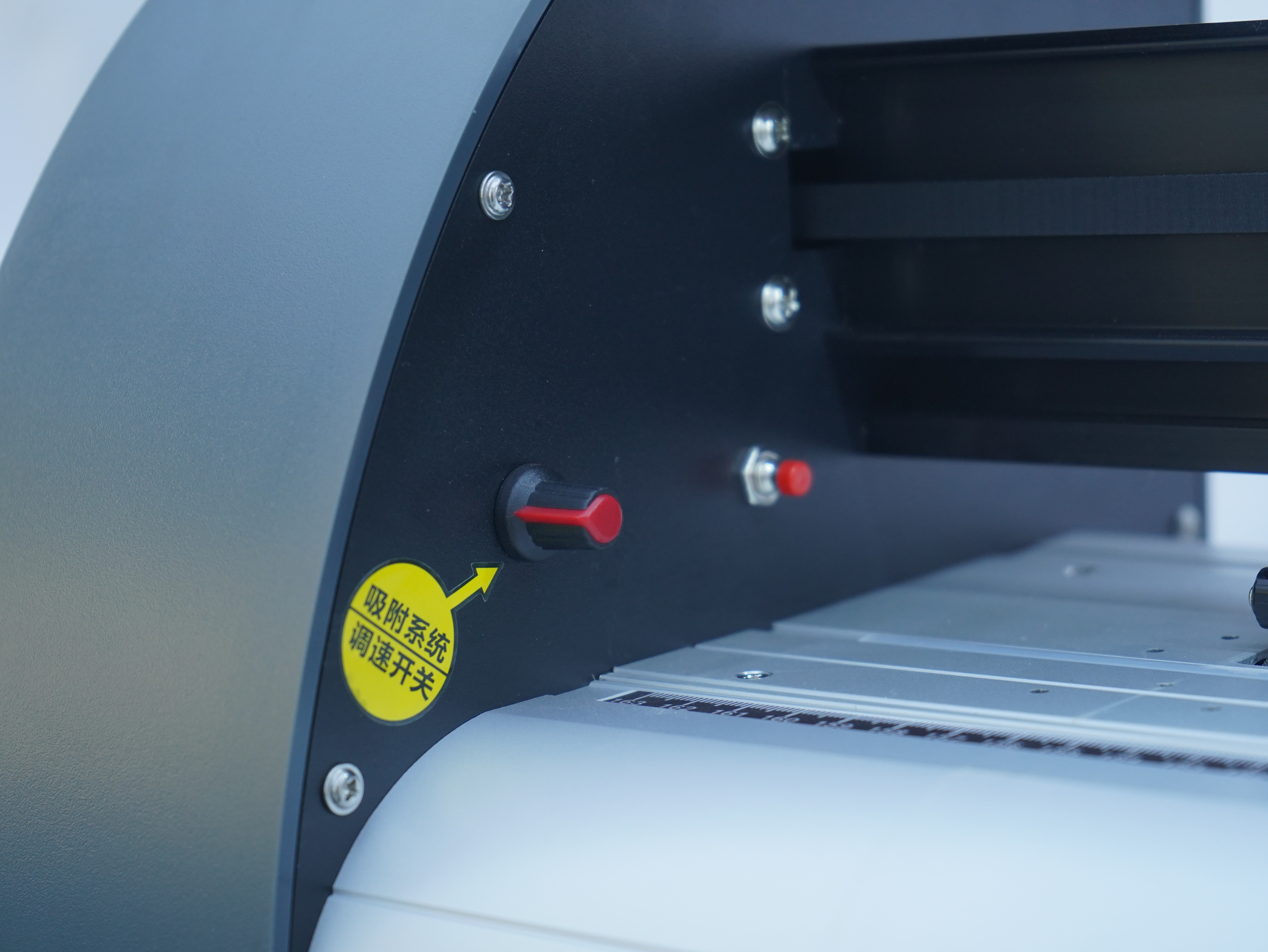
For shops offering multiple film services, plotter choice also matters. YINK 903X Pro supports PPF, window film, tint, and vinyl, making it suitable for growing shops that handle different film categories.
YINK 905X Elite is positioned for shops that need higher cutting speed, precision, and stronger workflow efficiency.
YINK’s Super Nesting function can help shops plan material usage more efficiently.
For high-cost films such as colored PPF, reducing waste is not only a technical benefit. It directly affects job profitability.
Service Menu Strategy for 2026
The most profitable shops in 2026 will not force customers into one material. They will build a clear service menu that makes each option easy to understand.
A basic styling package may include vinyl roof wrap, mirror caps, stripes, or accent panels. This package attracts customers who want visual change without a full vehicle project.
A protection package may include clear PPF on the front bumper, hood, fenders, mirrors, rocker panels, or high-impact areas. This package is suitable for customers who like the factory color but want better protection.
A premium transformation package may include full-body colored PPF, optional ceramic coating, and maintenance education. This package is ideal for high-value vehicles and customers who want both a new look and paint protection.
A simple service menu can be structured like this:
→ Vinyl wrap for styling, branding, and short-term color change
→ Clear PPF for paint protection while keeping the original color
→ Colored PPF for premium color change plus paint protection
Better Sales Questions for Customers
Instead of asking, “Do you want vinyl or colored PPF?” shops can guide the customer with better questions.
| Question | What It Helps You Understand |
|---|---|
| How long do you plan to keep the car? | Whether long-term protection matters |
| Is this a personal vehicle, business vehicle, or leased vehicle? | Whether styling, branding, or resale value is more important |
| Do you mainly want a new look or paint protection? | Whether vinyl or colored PPF is the better fit |
| Do you drive often on highways or rough roads? | Whether chip protection should be prioritized |
| Are you looking for a short-term change or a long-term premium finish? | Whether the customer should invest in colored PPF |
These questions make the sales conversation more consultative.
They also reduce the risk of selling the wrong service to the wrong customer.
Common Mistakes Shops Should Avoid
Mistake 1: Selling Colored PPF Like Regular Vinyl Wrap
Colored PPF needs a different sales explanation.
If the customer sees it only as an expensive color-change film, they may compare it directly with vinyl and reject the price.
Shops should explain the protection value, material behavior, installation process, and long-term benefit.
Mistake 2: Ignoring Material Waste
Waste matters more when film cost is high.
Poor layout, inaccurate patterns, and unnecessary recuts can quickly reduce profit. A material-saving workflow is especially important for colored PPF.
Mistake 3: Not Training Installers
Installers need time to learn how a new film behaves.
A shop should test tension, heat response, edge wrapping, and finish consistency before selling full-body projects to demanding customers.
Mistake 4: Creating Confusing Customer Expectations
Customers should understand what colored PPF can and cannot do.
It offers stronger protection than vinyl, but it is not indestructible.
Vinyl offers excellent styling flexibility, but it should not be sold as the same level of paint protection as PPF.
Mistake 5: Offering Too Many Colors Too Early
Inventory can become a hidden cost.
Shops should start with proven colors, local demand, and supplier availability before stocking too many finishes.
The goal is not to offer every color. The goal is to offer the right colors profitably.
Final Recommendation: Which One Should Your Shop Offer?
Vinyl wrap remains essential for styling, commercial graphics, creative design, and budget-friendly color change.
Colored PPF is better for premium customers who want color and protection in one service.
One is not simply better than the other. They solve different problems.
PPF shops should consider colored PPF if they already have strong installation skills and a customer base that values premium protection.
Wrap shops should consider colored PPF if they want to move into higher-ticket protection services, but they should prepare their team for the differences in material handling and customer expectations.
The best opportunity is not choosing colored PPF or vinyl wrap. The best opportunity is building a service menu where both have a clear role.
When shops understand cost, risk, installation workflow, and customer intent, they can sell with more confidence and protect their margin.
For shops that want to support both services, digital cutting workflow becomes increasingly important.
YINK offers PPF cutting software, multi-material plotters, and pattern workflow tools that help shops improve cutting accuracy, reduce waste, and serve customers across PPF, tint, and vinyl applications.
FAQ
Is colored PPF better than vinyl wrap?
Colored PPF is better for customers who want color change and paint protection together. Vinyl wrap is better for customers who want more design flexibility, commercial graphics, or a lower-cost visual change.
Does colored PPF last longer than vinyl wrap?
Colored PPF is generally designed for stronger protection and long-term use, but lifespan depends on film quality, installation, maintenance, climate, vehicle use, and manufacturer specifications.
Can vinyl wrap protect paint like PPF?
Vinyl wrap can provide light surface coverage, but it is not designed to absorb stone chips and road debris the same way paint protection film is.
Shops should explain this clearly to avoid customer misunderstanding.
Should a wrap shop start offering colored PPF?
A wrap shop can add colored PPF if it has strong installation skills, premium customer demand, and proper training.
The shop should treat colored PPF as a premium protection service, not just another wrap material.
Can a plotter cut both colored PPF and vinyl wrap?
Yes, many professional plotters can cut both materials. Shops should confirm blade pressure, film thickness, cutting speed, software compatibility, and material handling settings before production.
Data Sources & References
The information in this article is based on public industry reports, official documentation, market research, and practical industry experience available at the time of writing.
Referenced sources may include:
→ Fortune Business Insights automotive wraps films market report
→ Grand View Research paint protection film market report
→ Avery Dennison Supreme Wrapping Film documentation
→ SEMA
→ IWFA
→ Official film manufacturer documentation
→ Government vehicle regulations
Data may vary by region, vehicle type, installation process, film brand, supplier availability, and market conditions.
Last reviewed: June 2026
Post time: Jun-03-2026


