
Why Vehicle Data Is the New Competitive Advantage for PPF Shops
The shops with the best installers usually won more customers, completed more jobs, and built stronger reputations.
While installation quality remains critical today, something else is quietly becoming one of the most important competitive advantages in the industry:
Vehicle data.
Most customers never think about vehicle data.
They see a clean installation, a wrapped edge, or a perfectly aligned panel and assume the result comes entirely from installer experience.
In reality, every successful pre-cut installation depends on something happening long before the installer touches the vehicle.
It depends on accurate vehicle information, reliable pattern development, updated databases, and efficient digital workflows.
The future of PPF is not only about installation skill. It is increasingly about data availability and workflow efficiency.
As vehicle designs become more complex and new models enter the market faster than ever, the ability to access accurate vehicle data is becoming one of the most valuable assets a PPF shop can have.
The PPF Industry Is Becoming Data-Driven
The automotive aftermarket has always evolved alongside vehicle technology.
When paint protection film first became popular, installers relied heavily on bulk film and hand-cutting techniques.
Success depended on craftsmanship.
Over time, pre-cut patterns transformed the industry.
Shops could work faster, reduce cutting on paint, improve consistency, and train new installers more efficiently.
Today, another shift is happening.
The industry is moving from being installer-centered to becoming increasingly data-driven.
Modern PPF businesses now rely on:
→ Digital pattern databases
→ Vehicle-specific measurements
→ Software updates
→ Cloud-based workflows
→ Vehicle scanning technologies
→ Pattern verification systems
The most successful shops are no longer simply asking:
"Who is our best installer?"
They are also asking:
"How strong is our data?"
This change is accelerating because vehicles themselves are changing.
Why Vehicle Data Matters More Than Ever
The automotive market is experiencing one of the fastest periods of change in its history.
Manufacturers are releasing:
→ More EVs
→ More regional versions
→ More trim variations
→ More special editions
→ More annual updates
According to the International Energy Agency, global electric car sales grew by 20% in 2025 and exceeded 20 million vehicles, meaning one-quarter of all new cars sold worldwide were electric.
This rapid change matters for PPF shops because new vehicles create new demand for accurate pattern data.
Twenty years ago, a vehicle platform might remain largely unchanged for many years.
Today, manufacturers frequently update sensors, cameras, bumpers, lighting systems, trim pieces, and charging-port designs.
Even small changes can affect PPF fitment.
For example, a Tesla Model Y sold in one region may have subtle differences from a version sold elsewhere.
Similarly, a facelifted BMW, Mercedes-Benz, or Toyota model may appear nearly identical to the customer while requiring significant pattern adjustments.
These differences create a challenge for PPF shops.
A customer arrives with a new vehicle and expects immediate service.
The shop checks the software.
The pattern does not exist.
The shop now faces a difficult choice:
→ Delay the installation
→ Modify an existing pattern
→ Cut manually
Each option introduces additional cost and risk.
A missing vehicle pattern can cost a shop a booking, a customer, and future referrals.
This is why vehicle data has become increasingly valuable.
The ability to access accurate patterns quickly can directly affect revenue.
What Exactly Is Vehicle Data in the PPF Industry?
When many installers hear the phrase "vehicle data," they immediately think about pattern files.
However, vehicle data is much broader than that.
In the PPF industry, vehicle data may include:
→ PPF patterns
→ Window tint patterns
→ Vinyl wrap templates
→ Vehicle measurements
→ Scanner-generated geometry
→ Trim-level variations
→ Model-year differences
→ Coverage configurations
→ Installation adjustments
→ Edge wrapping information
In simple terms, vehicle data is the digital foundation behind modern film installation.
Without it, pre-cut workflows become difficult to maintain.
Vehicle data is the foundation behind every successful pre-cut installation.
The installer may only see the final pattern on the screen.
Behind that pattern may be hundreds of hours of scanning, measuring, testing, verification, and database management.
This invisible infrastructure is becoming one of the most important competitive advantages in the industry.
How Better Data Improves Shop Efficiency
Every PPF shop wants greater efficiency.
More efficiency means:
→ More completed jobs
→ Better profit margins
→ Less installer frustration
→ Improved customer satisfaction
Vehicle data directly contributes to these goals.
Faster Job Preparation
When a complete and accurate pattern already exists, preparation becomes significantly easier.
Instead of searching for alternatives or modifying existing templates, installers can begin production immediately.
This reduces administrative work and shortens lead times.
Less Manual Measuring
Without reliable data, installers often need to measure panels manually.
Manual measuring takes time and introduces variability.
With accurate vehicle patterns, much of this work has already been completed.
Less Pattern Modification
Poor data often forces installers to adjust patterns before cutting.
While experienced installers can make modifications, these changes consume valuable time.
Better data means fewer corrections.
Better data means fewer surprises.
Reduced Installation Time
Accurate patterns typically fit better.
Better fitment can reduce installation complexity and improve workflow consistency.
Even small time savings become significant when repeated across hundreds of jobs each year.
Better Customer Experience
Customers rarely ask about databases.
However, they do notice when a shop can:
→ Schedule faster
→ Provide accurate quotes
→ Deliver consistent results
→ Handle new vehicle models confidently
Vehicle data supports all of these customer-facing advantages.
Every minute spent searching for patterns or correcting fitment issues is time that cannot be billed to customers.
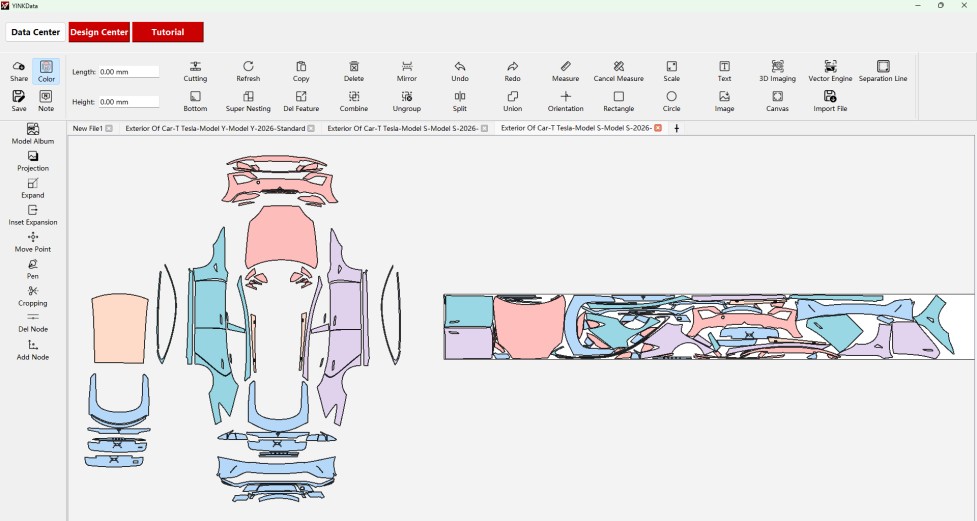
The Hidden Cost of Poor Vehicle Data
Many shop owners track labor costs.
Many track film usage.
Some track marketing expenses.
Very few track the cost of poor data.
Yet poor data creates operational costs throughout the entire workflow.
Lost Bookings
Customers often want protection immediately after purchasing a vehicle.
If the required pattern is unavailable, some customers may simply choose another shop.
The shop never sees this cost on a financial report.
But it is still a cost.
Material Waste
Pattern inaccuracies can result in:
→ Failed cuts
→ Re-cut panels
→ Additional film consumption
→ Increased labor time
Material waste is one of the most visible consequences of poor vehicle data.
Installer Frustration
Installers prefer working with reliable patterns.
Repeated fitment issues create frustration and reduce productivity.
Over time, this can affect morale and retention.
Longer Production Time
Every adjustment adds time.
Every correction adds labor.
Every workaround reduces efficiency.
Poor data creates operational costs that many shops never measure.
Why New Vehicle Models Create a Data Challenge
Vehicle manufacturers are introducing new models faster than ever before.
In the past, a PPF database could remain relevant for years with only occasional updates.
Today, that is no longer realistic.
Automakers are accelerating product development cycles while introducing more regional variations, trim levels, and electric vehicle platforms.
For PPF shops, every new model creates a potential data challenge.
New EV Releases
Electric vehicles have become one of the biggest drivers of new pattern demand.
Unlike traditional vehicles, many EVs feature:
→ Unique front-end designs
→ Flush door handles
→ Camera-heavy architectures
→ New charging port locations
→ Different panel structures
These design changes often require entirely new pattern development rather than simple modifications of existing templates.
A new EV entering the market can quickly generate customer demand before accurate patterns become widely available.
Regional Models
Vehicle manufacturers increasingly customize vehicles for different markets.
A vehicle sold in North America may have different:
→ Sensors
→ Lighting systems
→ Bumpers
→ Safety equipment
→ Exterior trim
than the same model sold in Europe, Asia, or the Middle East.
To customers, these vehicles may appear identical.
To a pattern developer, they may be completely different.
Special Editions and Performance Variants
Manufacturers are also launching more:
→ Performance versions
→ Limited editions
→ Sport packages
→ Luxury packages
→ Market-specific trims
Each variation creates additional complexity for pattern databases.
Luxury Vehicle Variants
Premium manufacturers such as BMW, Mercedes-Benz, Porsche, Lucid, and Tesla frequently introduce updates that require new measurements and pattern verification.
As vehicle variety increases, keeping data current becomes increasingly important.
Vehicle manufacturers release new models faster than ever, making continuous data updates essential.
How Leading PPF Shops Use Data as a Business Asset
The most successful PPF businesses no longer view vehicle data as a software feature.
They view it as a business asset.
Just as some companies invest in equipment, training, or marketing, leading shops invest in access to better data.
Why?
Because data improves operational consistency.
Data Improves Consistency
Customers expect predictable results.
Accurate vehicle data helps shops deliver:
→ Consistent fitment
→ Consistent quality
→ Consistent workflow
→ Consistent customer experience
Consistency is one of the most valuable qualities a business can develop.
Data Supports Scaling
As a business grows, relying solely on individual installer knowledge becomes increasingly difficult.
New employees must be trained.
Multiple installation teams must follow the same process.
Shops may expand into multiple locations.
Strong vehicle data helps create standardized workflows that support growth.
Data Reduces Dependence on Individual Installers
Many businesses eventually discover a difficult reality:
Their workflow depends too heavily on a few highly experienced installers.
When those individuals are unavailable, productivity suffers.
Data-driven workflows help reduce this dependency.
The more a shop relies on systems and data, the less it relies on individual hero installers.
This creates a stronger and more scalable business model.
Vehicle Data and Customer Experience
Vehicle data is often discussed as an operational tool.
However, it also plays an important role in customer experience.
Most customers may never ask about pattern databases, but they notice the benefits.
Faster Quotes
When vehicle information is readily available, shops can provide faster and more accurate estimates.
Customers appreciate quick answers.
Faster Scheduling
A shop that already has the necessary data can move directly into production planning.
This often shortens lead times.
Better Confidence
Imagine two customer experiences.
Shop A says:
"We don't have the pattern yet."
Shop B says:
"We already support your vehicle and can schedule installation this week."
Which shop appears more professional?
The answer is obvious.
Professional Presentation
Modern customers expect businesses to use modern tools.
When a shop can confidently explain vehicle coverage, pattern options, and installation workflows, customer trust increases.
Vehicle data helps create that confidence.
Why Vehicle Data Matters for EVs and Future Vehicles
The next generation of vehicles will likely make data even more important.
Automotive design is becoming increasingly complex.
More Sensors
Modern vehicles include:
→ Radar systems
→ Parking sensors
→ Collision avoidance systems
→ Driver-assistance technology
Each component affects pattern development.
More Cameras
Camera systems continue to expand.
Accurate placement and coverage become increasingly important.
More Complex Panels
Manufacturers are experimenting with:
→ Larger body panels
→ Integrated lighting systems
→ Flush-mounted components
→ New materials
These changes require increasingly sophisticated pattern development.
Faster Refresh Cycles
Vehicle refresh cycles continue to accelerate.
This means databases must evolve faster as well.
The more complex vehicles become, the more valuable accurate data becomes.
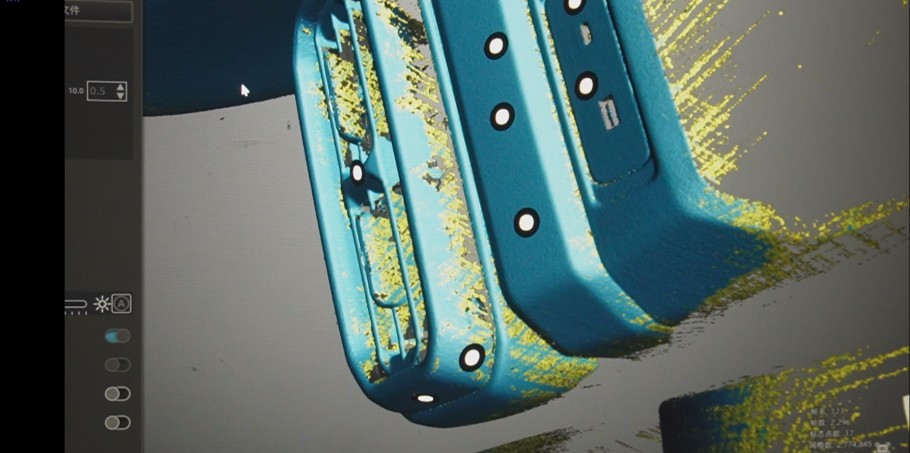
How 3D Scanning Supports Vehicle Data Development
As vehicle complexity increases, traditional measurement methods become less practical.
This is where 3D scanning technology becomes valuable.
Capturing New Vehicles
Scanning allows teams to collect detailed geometric information from new vehicles.
This data can support:
→ Pattern development
→ Verification
→ Coverage planning
→ Database expansion
Supporting Pattern Creation
Modern scanning systems help transform physical vehicle surfaces into digital reference models.
These digital assets can then be used to develop more accurate patterns.
Improving Database Accuracy
The quality of a database depends on the quality of the data used to build it.
Better source data often leads to better pattern outcomes.
Accelerating Updates
Scanning can also reduce the time required to capture information from newly released vehicles.
Scanning technology helps transform physical vehicles into digital assets.
For shops focused on future growth, this capability is becoming increasingly important.
Why Large Pattern Databases Matter
A pattern database is only valuable if it helps installers work efficiently.
The size of the database is important, but size alone is not enough.
Coverage Matters
The broader the coverage, the greater the likelihood that a shop can immediately support a customer's vehicle.
Update Speed Matters
New vehicles enter the market continuously.
Databases must evolve at the same pace.
Accuracy Matters
A large database filled with inaccurate patterns creates frustration rather than efficiency.
Verification and quality control are critical.
Global Data Matters
Vehicle trends vary by region.
A global database can help shops access patterns for vehicles that may be uncommon in their local market.
A large database is valuable only when it is continuously updated and verified.
This is one reason why many successful shops place significant importance on database quality when evaluating software platforms.
How YINK Helps Shops Build a Data Advantage
As vehicle data becomes more important, many shops are looking for ways to improve data accessibility and workflow efficiency.
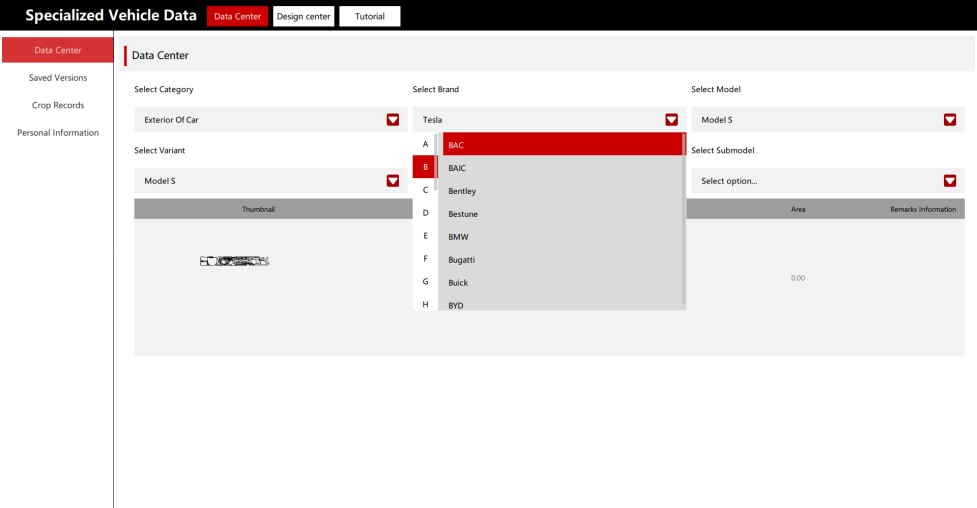
YINK PPF cutting software supports this process through an ecosystem that combines:
→ PPF software
→ Window tint pattern data
→ Plotter integration
→ Vehicle pattern databases
→ Scanner-supported workflows
→ Open platform architecture
Rather than focusing on a single tool, the objective is to help shops manage vehicle data throughout the entire workflow.
YINK currently provides access to 450,000+ verified patterns collected from 70+ countries and regions.
Combined with continuous updates and vehicle data development initiatives, this helps shops improve coverage and support a wider range of vehicles.
The goal is not simply to store data.
The goal is to help shops use data more effectively.
What Will Vehicle Data Look Like in the Next Five Years?
The next stage of industry development will likely be driven by even greater digital integration.
Several trends are already emerging.
Cloud-Based Updates
Pattern updates are becoming faster and more centralized.
Cloud systems allow shops to access new vehicle information without waiting for manual updates.
AI-Assisted Pattern Development
Artificial intelligence is beginning to support pattern analysis and workflow optimization.
While human verification remains essential, AI may help accelerate development processes.
Real-Time Vehicle Data Collection
Data collection workflows are becoming more connected.
Vehicle information can move more quickly from physical vehicles into digital systems.
Global Data Sharing
The industry is becoming increasingly interconnected.
Information collected in one region may help support installations in another.
Digital Shop Ecosystems
Future PPF businesses may operate within complete digital ecosystems that connect:
→ Vehicle data
→ Pattern management
→ Software platforms
→ Plotters
→ Scanners
→ Installation workflows
The next generation of PPF businesses will be built around data ecosystems rather than standalone tools.
Final Thoughts
The PPF industry has always rewarded technical skill.
That will not change.
However, technical skill alone is no longer enough.
As vehicles become more advanced and customer expectations continue to rise, vehicle data is becoming one of the most important resources available to modern PPF shops.
Better data helps businesses:
→ Work faster
→ Reduce waste
→ Improve consistency
→ Support new vehicle models
→ Deliver a better customer experience
The shops that recognize this shift early will be better positioned for long-term growth.
Vehicle data is no longer just a technical resource. It is becoming one of the most important competitive assets a PPF shop can own.
The shops that invest in better data today will be better prepared for the vehicles of tomorrow.
FAQ
What is vehicle data in the PPF industry?
Vehicle data includes digital patterns, measurements, scanner information, trim differences, and vehicle-specific installation data used for pre-cut film applications.
Why is vehicle data important for PPF shops?
Accurate vehicle data helps improve installation efficiency, reduce material waste, improve consistency, and increase customer satisfaction.
How does vehicle data affect profitability?
Better vehicle data reduces labor time, minimizes installation errors, improves workflow efficiency, and helps shops complete more jobs.
What role does 3D scanning play in vehicle data collection?
3D scanning helps capture detailed vehicle geometry that can support pattern development, verification, and database updates.
How does YINK support vehicle data management?
YINK provides vehicle pattern databases, software tools, scanner-supported workflows, and data management solutions that help shops access and manage vehicle information more efficiently.
References
The information in this article is based on public industry reports, official documentation, automotive aftermarket research, and practical paint protection film industry experience available at the time of writing.
References:
→ International Energy Agency. “Global EV Outlook 2026: Trends in Electric Cars.”
→ Grand View Research. “Paint Protection Film Market Size & Share Report.”
→ SEMA. “Automotive Aftermarket Industry Resources.”
→ IWFA. “Window Film Industry Resources.”
→ Official vehicle manufacturer documentation and automotive aftermarket resources.
Data may vary by region, vehicle type, model year, software platform, and installation workflow.
Last reviewed: June 2026
Post time: Jun-23-2026


