
How to Reduce Material Waste in a PPF Shop: 10 Practical Ways That Actually Work
Introduction
Material waste is one of the biggest hidden costs in a Paint Protection Film (PPF) business.
Many shop owners focus on selling more jobs, hiring more installers, or investing in expensive equipment. However, they often overlook a much simpler way to increase profit: using every roll of film more efficiently.
Every unnecessary cut, installation mistake, or discarded offcut eats into your profit margin. While a few inches of wasted film may seem insignificant, those losses quickly add up over weeks and months.
The good news is that most material waste is preventable.
Whether you are opening your first PPF shop or trying to improve an established operation, understanding where waste comes from is the first step toward building a more profitable business.
In this guide, we will explore the most common causes of material waste and share practical strategies used by successful PPF shops to reduce costs without sacrificing installation quality.
1. Start with Proper Surface Preparation
One of the biggest misconceptions among beginners is that material waste only happens during cutting.
In reality, many installations fail long before the film is applied.
Dust, wax residue, grease, and even tiny particles that are invisible to the naked eye can prevent the adhesive from bonding correctly. The result is often lifting edges, trapped contamination, or bubbles that require the film to be removed and replaced.
A few extra minutes spent preparing the surface can save hundreds of dollars in wasted material over time.
Professional installers typically follow a consistent preparation process that includes:
a. Washing the vehicle thoroughly before installation.
b. Removing contaminants with a clay bar if necessary.
c. Cleaning the panel with isopropyl alcohol to eliminate grease and oils.
d. Drying the surface completely before applying slip solution.
Think of preparation as an investment rather than an extra step.
Five minutes of cleaning is far less expensive than replacing an entire panel of film.
2. Manual Cutting Often Creates Hidden Waste
Many new shops begin with manual cutting because the initial investment is lower.
While there is nothing inherently wrong with hand cutting, it requires a high level of experience and consistency.
Even skilled installers rarely cut every panel exactly the same way.
Common problems include:
a. Leaving excessive safety margins.
b. Incorrect measurements.
c. Uneven edges.
d. Cutting the same panel multiple times.
These small differences may only waste a few inches of film per vehicle, but across hundreds of installations each year, the financial impact becomes significant.
Manual cutting also creates another challenge: every installer develops slightly different habits.
Without standardized cutting patterns, material usage becomes difficult to control.
This is one reason many growing PPF businesses are gradually adopting digital cutting workflows. Pre-designed vehicle patterns help improve consistency, reduce unnecessary trimming, and minimize material waste, especially when multiple installers are working in the same shop.
3. Poor Material Layout Can Waste More Film Than You Think
Not all waste happens during installation.
Sometimes it begins before the film is even cut.
Many installers focus only on completing the current job without considering how the remaining material can be used for future vehicles.
For example:
a. Large empty spaces between panels.
b. Unused sections near the edge of the roll.
c. Small leftover pieces that cannot be reused.
Over time, these inefficient layouts consume far more material than most shop owners realize.
Professional shops often plan the entire cutting layout before sending the job to the cutter.
They try to:
a. Place multiple parts together whenever possible.
b. Minimize empty spaces between patterns.
c. Preserve usable offcuts for smaller components.
Material layout is just as important as installation technique.
The better the layout, the more vehicles each roll of film can cover.
As your business grows, investing in the right equipment for a PPF business becomes increasingly important. Better tools not only improve installation quality but also help reduce unnecessary material waste throughout the workflow.
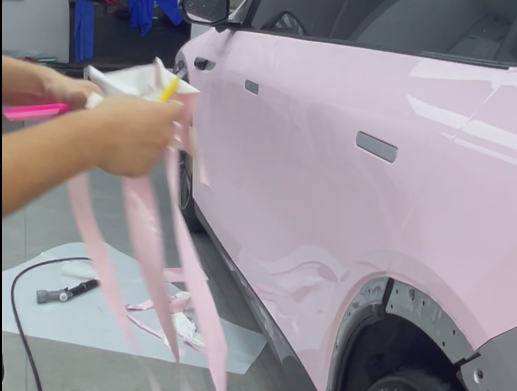
4. Choosing the Wrong Film Can Increase Waste
Many beginners assume that buying cheaper film is the easiest way to reduce costs.
Unfortunately, the opposite is often true.
Lower-quality films are frequently more difficult to install because they may:
a. Stretch unevenly.
b. Have inconsistent adhesive performance.
c. Tear more easily.
d. Leave visible marks after repositioning.
These issues increase installation time and often require replacing damaged sections.
Higher-quality TPU films generally provide better flexibility and more predictable installation characteristics, helping technicians work more confidently while reducing unnecessary waste.
This does not necessarily mean buying the most expensive product on the market.
Instead, choose a film that matches your team’s skill level and the expectations of your customers.
Sometimes paying slightly more for reliable materials actually lowers your overall operating cost.
5. Standardize Your Installation Process
One of the biggest differences between an average shop and a highly profitable one is consistency.
Imagine two technicians working in the same business.
Both use the same film.
Both install the same vehicle.
Yet one wastes almost twice as much material.
Why?
Because every installer follows a different process.
Successful shops reduce this variation by creating standard operating procedures (SOPs) for every stage of installation.
These procedures may include:
a. Vehicle inspection before installation.
b. Cleaning and preparation standards.
c. Film positioning methods.
d. Heat gun temperature guidelines.
e. Final quality inspection.
Standardization does not remove craftsmanship.
Instead, it ensures that every technician delivers consistent results while using roughly the same amount of material.
For growing businesses, consistency is often more valuable than speed.
A predictable workflow makes it easier to train new employees, maintain quality, and control costs.
6. Inventory Management Is Often Overlooked
Material waste does not only happen during installation. It also happens in storage.
Many PPF shops focus on reducing cutting waste but overlook how inventory is managed. Poor inventory practices can lead to expired film, damaged rolls, duplicate purchases, or leftover materials that are never used.
Common inventory problems include:
a. Purchasing too much film for slow-moving colors or finishes.
b. Improper storage that exposes film to heat, humidity, or direct sunlight.
c. Opening multiple rolls of the same material before finishing the previous one.
d. Failing to track roll usage and remaining lengths.
Keeping inventory organized is just as important as choosing the right film.
Many successful shops label every roll with its opening date, remaining length, and storage location. Some also perform weekly inventory checks to ensure older materials are used first.
Good inventory management reduces unnecessary purchases and helps maximize the value of every roll.
7. Train Before You Scale
One of the biggest mistakes growing PPF businesses make is expanding too quickly.
When business starts to increase, many owners immediately hire more installers. However, without standardized training, more employees often mean more mistakes and more wasted material.
A structured training process should include:
a. Correct surface preparation.
b. Safe cutting techniques.
c. Film positioning and stretching.
d. Heat control.
e. Final inspection standards.
Experienced technicians usually waste less material not because they work faster, but because they make fewer mistakes.
Instead of asking new employees to learn through trial and error, provide clear procedures and regular practice. Investing in training early often saves far more money than replacing damaged film later. Shops with a structured approach to training PPF installers usually experience fewer installation errors and more consistent results.
Remember, a skilled installer is one of the best investments a PPF shop can make.
8. Use Technology to Improve Consistency
As the PPF industry continues to evolve, many shops are moving away from fully manual workflows toward more standardized processes.
Digital vehicle pattern databases and cutting systems allow installers to work with pre-designed templates rather than measuring and trimming every panel by hand.
The benefits include:
a. More consistent cutting results.
b. Reduced material waste.
c. Faster installation.
d. Easier training for new technicians.
e. Better repeatability across different installers.
Today, many professional shops use digital cutting solutions supported by large vehicle pattern databases to improve workflow efficiency and reduce dependence on manual cutting. These systems help standardize cutting results while reducing unnecessary material waste.
Efficient pattern layout is equally important. Advanced material nesting techniques allow shops to fit more parts onto every roll, improving utilization without affecting installation quality.
Well-known solutions in the industry include platforms such as YINK , which provide digital cutting workflows for automotive film installers.
Technology cannot replace skilled installers, but it can help them work faster, more accurately, and with greater consistency.
9. Small Savings Become Big Profit
Many shop owners underestimate how much money is lost through small amounts of daily waste.
Imagine a shop that saves just 0.5 meters of film per day.
That may not sound significant, but over time the numbers become surprisingly large.
| Time Period | Film Saved |
|---|---|
| One Day | 0.5 m |
| One Month (25 working days) | 12.5 m |
| One Year | 150 m |
Depending on the type of film being used, those savings can translate into thousands of dollars in additional profit each year while steadily improving your PPF shop’s profit margin.
The same principle applies to installation time.
If every technician finishes one job just 20 minutes faster, the shop may be able to complete additional installations each week without hiring more staff.
Efficiency is not about rushing the job.
It is about eliminating unnecessary waste throughout the entire workflow.

10. Review Waste Data and Improve Continuously
Reducing PPF material waste should not be a one-time effort. The most efficient shops regularly review where waste happens and adjust their workflow based on real data.
This can be as simple as tracking which panels are most often re-cut, which installers generate the most offcuts, or which film types are harder to work with.
Useful waste tracking points include:
a. How much film is used per vehicle.
b. How many panels need to be re-cut.
c. Which jobs create the most offcuts.
d. Which installers need additional training.
e. Which film types cause more installation issues.
Once you know where waste is coming from, it becomes much easier to fix the problem.
Continuous review helps shops improve material usage, refine training, and build a more profitable workflow over time.
Final Thoughts
Reducing material waste is not about being overly cautious or trying to save every small offcut.
It is about building a smarter, more consistent business.
The most successful PPF shops understand that profitability comes from hundreds of small improvements rather than one major change.
Better preparation reduces rework.
Better layouts reduce unnecessary cutting.
Better training reduces installation errors.
Better workflows improve consistency.
When these improvements work together, they create a business that is more efficient, more profitable, and easier to scale.
At the end of the day, the goal is not simply to use less film.
The goal is to create more value from every roll you purchase.
For entrepreneurs planning a new venture, building an efficient workflow from day one is one of the biggest factors that determines whether a PPF business is worth starting in the first place.
FAQ
1. What causes the most material waste during PPF installation?
The most common causes include poor surface preparation, inaccurate manual cutting, improper film layout, installation mistakes, and inconsistent workflows between technicians.
2. Can pre-cut patterns reduce material waste?
Yes. Pre-cut patterns help improve cutting accuracy, reduce unnecessary trimming, and provide more consistent results, especially for shops handling multiple vehicles every day.
3. Does higher-quality PPF reduce waste?
In many cases, yes. Premium TPU films are generally easier to handle, stretch more consistently, and are less likely to tear during installation, which can reduce costly mistakes.
4. How should PPF rolls be stored?
Store film in a cool, dry environment away from direct sunlight. Keeping rolls properly labeled and organized also helps prevent unnecessary waste and inventory loss.
5. How can new PPF shops reduce material costs?
Start by creating standard installation procedures, training technicians properly, planning cutting layouts carefully, and monitoring inventory regularly. Improving workflow is often more effective than simply buying cheaper materials.
6. Is manual cutting still practical for new shops?
Yes. Many businesses begin with manual cutting. However, as installation volume increases, standardized cutting methods and digital workflows often provide better consistency and improve material utilization.
7. How often should a PPF shop review its workflow?
It is a good practice to review installation procedures, inventory management, and material usage every few months. Continuous improvement helps identify hidden waste and maintain consistent quality.
8. Is reducing material waste only about saving money?
No. Reducing waste also improves installation consistency, shortens project turnaround times, increases customer satisfaction, and makes the business more scalable over the long term.
Post time: Jun-30-2026


