
Why Pattern Accuracy Matters More Than Ever in PPF Installation
Experienced installers could overcome imperfect templates, compensate for difficult body lines, and hand-trim film where necessary. Their craftsmanship often determined whether an installation looked professional or required costly rework.
While installation expertise remains essential today, the industry has changed dramatically.
Modern vehicles are becoming increasingly complex. Electric vehicles introduce new body designs. Driver-assistance systems require additional sensors and cameras. Manufacturers frequently update bumpers, mirrors, trim pieces, and lighting systems, even within the same model generation.
As a result, installers are relying more than ever on accurate digital patterns rather than manual adjustments.
Today, outstanding PPF installations are built on two foundations: skilled installers and highly accurate vehicle data.
Pattern accuracy is no longer just a technical concern for software developers. It directly affects installation speed, material waste, customer satisfaction, and ultimately, business profitability.
For modern PPF shops, investing in accurate patterns has become just as important as investing in experienced technicians. It also connects directly with vehicle data for PPF shops, because every accurate pattern starts with reliable vehicle information.
How PPF Installation Has Changed Over the Past Decade
The workflow inside a professional PPF shop looks very different today than it did ten years ago.
Technology has gradually transformed nearly every stage of the installation process.
From Hand Cutting to Digital Patterns
In the early years of PPF installation, most work relied on bulk film.
Installers manually measured each panel, trimmed film directly on the vehicle, and depended heavily on personal experience.
This approach offered flexibility but also introduced several challenges.
→ Longer installation times
→ Greater dependence on installer experience
→ Increased risk of cutting vehicle paint
→ Higher material waste
→ More variation between technicians
As pre-cut software became more widely adopted, shops began moving toward standardized digital workflows.
Instead of measuring every panel manually, installers could select the vehicle model, choose a coverage package, and send the pattern directly to a plotter.
This significantly reduced preparation time while improving consistency.
Today, pre-cut installation has become the preferred workflow for many professional shops around the world.
Today's Installers Depend on Digital Workflows
Modern installation is no longer driven solely by manual craftsmanship.
Today's workflow typically includes:
→ Vehicle pattern databases
→ PPF cutting software
→ Digital plotters
→ 3D scanning technology
→ Pattern verification
→ Continuous software updates
Each component contributes to installation quality. For shops that frequently work on new vehicles, 3D scanning for PPF pattern development is becoming especially important.
If any part of the workflow lacks accuracy, the installer must spend additional time making manual corrections.
Modern PPF installation is no longer just a manual skill. It is a digital workflow.
As vehicles become more sophisticated, this dependence on digital accuracy continues to grow.
What Does Pattern Accuracy Really Mean?
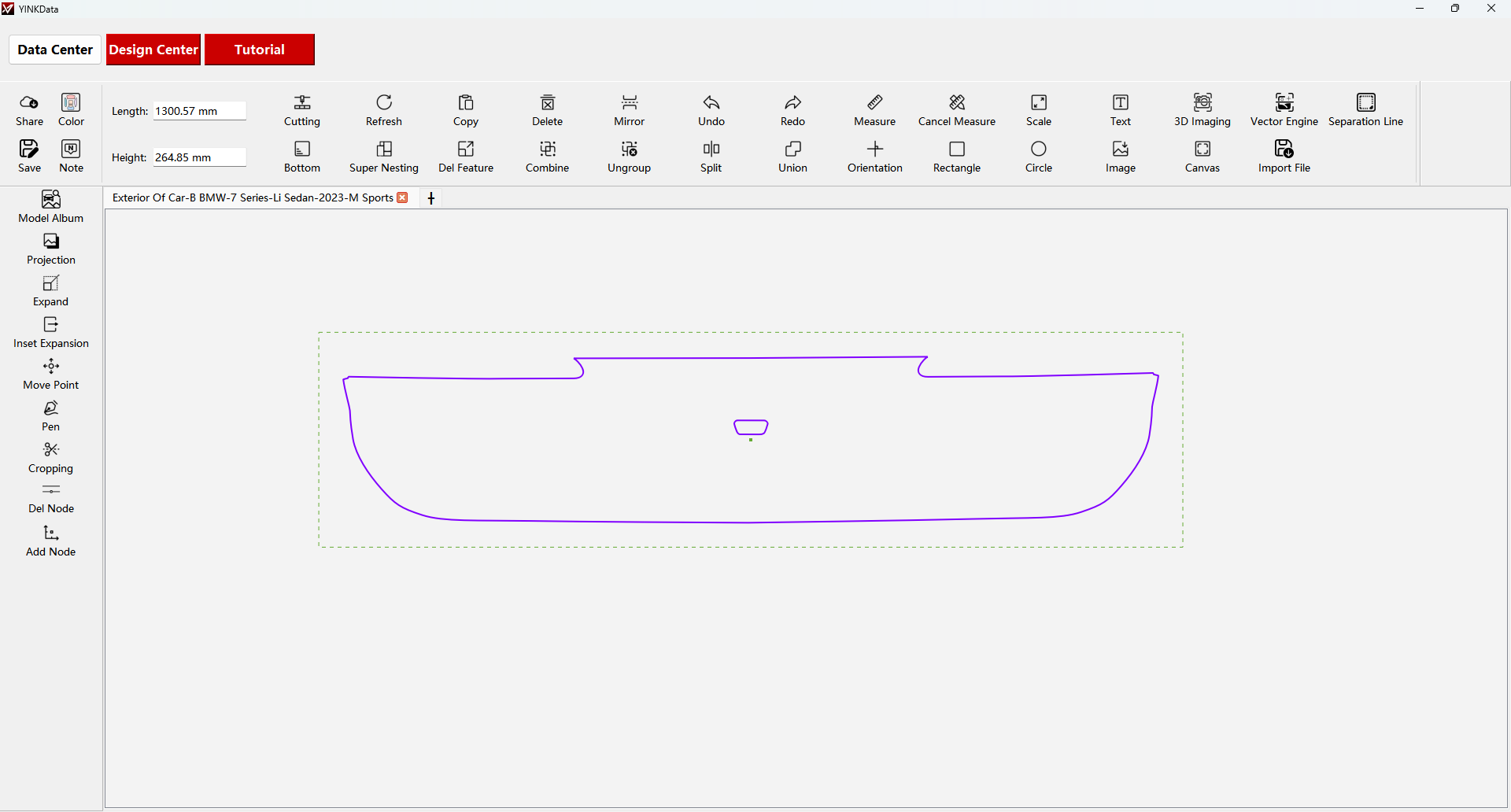
Many people assume pattern accuracy simply means following the edge of a vehicle panel.
In reality, pattern accuracy is much more comprehensive.
A high-quality pattern must account for numerous design variables that affect installation.
Precise Panel Coverage
The film should provide adequate protection while maintaining a clean appearance.
Coverage that is too small exposes painted surfaces. Coverage that is too large creates unnecessary installation difficulty.
Finding the right balance requires precise measurements.
Correct Edge Wrapping
Many professional installers prefer wrapping film around panel edges whenever possible.
Accurate patterns provide sufficient material for clean edge wrapping without creating excessive tension.
This improves both appearance and durability.
Consistent Gap Control
Uniform spacing between adjacent panels is another important indicator of installation quality.
Consistent gaps contribute to a factory-like appearance and improve customer satisfaction.
Proper Sensor Clearance
Modern vehicles include an increasing number of:
→ Cameras
→ Radar sensors
→ Parking sensors
→ Driver assistance systems
Patterns must accommodate these components without affecting functionality.
Trim-Level Compatibility
Two vehicles with nearly identical appearances may require different patterns.
Differences may include:
→ Sport packages
→ Luxury packages
→ Regional variations
→ Model-year updates
→ Market-specific trim
Accurate databases recognize these differences and provide the correct pattern for each vehicle.
Pattern accuracy is measured by how well a digital design matches the real vehicle, not simply by how closely it follows the panel edge.
Why Vehicle Design Is Making Pattern Accuracy More Important
Vehicle manufacturers are changing faster than ever before.
Every new generation introduces additional design complexity.
For PPF shops, these changes create greater demands on pattern development.
More Complex Body Lines
Modern vehicles feature sharper curves, sculpted surfaces, and increasingly aerodynamic body panels.
These designs improve vehicle performance but also increase installation difficulty.
Patterns that worked well several years ago may no longer provide the same level of fitment on today's vehicles.
More Cameras and Sensors
Advanced Driver Assistance Systems continue to expand across the automotive industry.
Vehicles now incorporate cameras and sensors into:
→ Front bumpers
→ Windshields
→ Side mirrors
→ Fenders
→ Rear bumpers
Pattern developers must consider these components during pattern creation.
Even small alignment errors can affect installation efficiency.
Flush Door Handles
Electric vehicles have popularized flush-mounted door handles.
Manufacturers including Tesla, Rivian, Lucid, BYD, and others have introduced increasingly sophisticated handle designs.
These components often require highly detailed pattern adjustments. This is one reason EV-related workflow topics, such as why EV owners are driving PPF demand, are becoming more important for modern shops.
Larger Curved Panels
Modern hoods, bumpers, and fenders frequently incorporate larger continuous curves.
Installing film across these surfaces requires patterns that distribute material correctly and minimize unnecessary tension.
Well-designed patterns make installation smoother while reducing the likelihood of lifting or overstretching.
More Frequent Vehicle Updates
Vehicle manufacturers no longer wait many years before introducing design changes.
Facelifts, software-driven hardware updates, and regional production differences have become increasingly common.
A pattern database must evolve at the same pace.
The more advanced vehicles become, the smaller the margin for pattern error.
Even a few millimeters of inaccuracy may require additional trimming, stretching, or repositioning during installation.
For busy shops, those extra minutes quickly become additional labor costs.
The Hidden Costs of Inaccurate Patterns
Many shop owners carefully calculate material cost, labor cost, rent, marketing expenses, and equipment investment.
However, very few calculate how much inaccurate patterns actually cost the business.
In most cases, these losses do not appear as one obvious expense.
They hide inside daily installation delays, failed cuts, rework, frustrated installers, and lower customer confidence.
Over time, small pattern problems can quietly reduce profitability.
Longer Installation Time
PPF installation depends heavily on workflow efficiency.
When a pattern is inaccurate, the installer must constantly adjust the film during installation.
This may include:
→ Repositioning the film
→ Stretching more than expected
→ Adjusting edge coverage
→ Correcting sensor openings
→ Modifying wrap areas
Each adjustment may take only a few minutes.
But when the same problem appears across a bumper, hood, mirrors, fenders, or full-body package, those minutes quickly add up.
For shops installing several vehicles per day, additional installation time becomes a direct labor cost.
More Material Waste
Pattern errors often lead directly to material waste.
A panel may need to be re-cut because it is too short.
An opening may not align correctly.
An edge may not provide enough wrap area.
A complex curve may require excessive stretching and become unusable.
A pattern error of only a few millimeters can become a major material loss when repeated across hundreds of installations.
This matters because PPF material is expensive, especially for full-front, full-body, matte, and colored PPF jobs.
Repeated Rework
Rework is one of the most damaging hidden costs in a PPF shop.
When pattern accuracy is poor, shops may need to:
→ Reinstall a panel
→ Replace film
→ Recut parts
→ Adjust edges
→ Bring the customer back for correction
Every rework job consumes additional material, labor, and scheduling capacity.
It also affects the customer’s perception of professionalism.
Lower Installer Confidence
Experienced installers can usually tell whether a problem comes from technique or from the pattern itself.
If a team repeatedly struggles with inaccurate patterns, they may lose confidence in the software workflow.
They may begin relying more on manual measuring, bulk cutting, or personal adjustments.
This reduces standardization and makes it harder for the business to scale.
Customer Complaints
Customers rarely understand pattern development.
They judge the final result.
If the film exposes paint, sits unevenly, fails to wrap correctly, or looks inconsistent around openings and trim, the customer will not blame the pattern database.
They will blame the shop.
That makes pattern accuracy a customer experience issue, not just a technical issue.
Reduced Profit Margins
Some shops complete more jobs every month but do not see profit increase at the same pace.
One possible reason is hidden inefficiency.
If every vehicle takes 10, 20, or 30 minutes longer because of fitment issues, the shop loses hundreds of labor hours over a year.
Pattern errors do not always create one large loss. They often reduce profit little by little every day.
How Accurate Patterns Improve Shop Efficiency
Accurate patterns do more than improve fitment.
They make the entire installation workflow smoother.
For a modern PPF shop, efficiency comes from many small improvements repeated across every job.
Less Manual Adjustment
When a pattern matches the vehicle correctly, installers do not need to constantly correct cut lines, openings, edges, or wrap areas.
This allows them to focus on surface preparation, film handling, tension control, and final finishing.
In other words, the installer spends more time installing and less time fixing the pattern.
Faster Plotting
Accurate data allows patterns to move more quickly from software to plotter.
The shop can reduce unnecessary editing, checking, and layout correction before cutting.
This improves production flow, especially when multiple jobs are scheduled on the same day. A reliable setup also depends on choosing the right workflow tools, which is why many new business owners study what equipment a new PPF shop needs before investing.
Shorter Installation Time
A precise pattern reduces surprises during installation.
There is less need to remeasure, recut, or reposition.
The installer can work with greater confidence.
Saving a few minutes on each panel can become several hours over the course of a week.
Accurate patterns save minutes on every panel, and those minutes become hours over the course of a week.
More Consistent Results
Digital workflows are valuable because they create repeatability.
When every installer uses the same verified pattern, the shop can deliver more consistent results across different technicians, bays, and locations.
This is especially important for growing businesses.
Higher Daily Throughput
Many shop owners believe that increasing output requires more installers, more machines, or a larger facility.
Sometimes that is true.
But improving workflow efficiency can also increase daily throughput without increasing overhead.
If a shop can complete one more vehicle or several more panels per day because of better data, the long-term financial impact can be significant.
How High-Quality PPF Patterns Are Developed
Many installers use digital patterns every day, but few customers understand how those patterns are created.
A truly reliable PPF pattern is not simply drawn on a computer.
It is developed through a complete process of vehicle identification, data collection, digital modeling, pattern design, real vehicle testing, verification, and ongoing updates.
Vehicle Acquisition
Every high-quality pattern starts with the real vehicle.
The development team must confirm:
→ Model year
→ Trim level
→ Market version
→ Exterior package
→ Sensor and camera layout
→ Special equipment or appearance options
If the vehicle information is wrong, even good scan data can become difficult to use correctly.
3D Scanning
High-precision 3D vehicle scanning helps capture the shape, curves, edges, openings, and details of the vehicle.
This may include bumpers, hoods, fenders, mirrors, charging port areas, sensors, lights, and complex trim sections.
The scan turns a physical vehicle into a digital reference that can support pattern development.
Digital Modeling
Raw scan data must be cleaned and processed.
Engineers may need to organize point cloud data, correct surfaces, check dimensions, and prepare usable digital geometry.
This step creates the foundation for accurate pattern design.
Pattern Design
Pattern designers then create usable PPF patterns based on the digital vehicle model.
This process must consider:
→ Cut lines
→ Edge wrapping
→ Sensor openings
→ Installation tension
→ Film stretch behavior
→ Practical installer workflow
A good pattern is not only accurate on screen. It must also be practical in real installation conditions.
Real Vehicle Testing
Before a pattern becomes reliable, it should be tested on the real vehicle.
Testing helps determine whether the pattern fits correctly, installs smoothly, and provides the expected coverage.
Many patterns need several rounds of adjustment before they are ready for production use.
High-quality patterns are created through repeated testing and verification, not by drawing lines on a computer.
Database Verification
After testing, the pattern must be correctly classified inside the database.
This includes vehicle brand, model, year, trim, market version, panel category, and coverage configuration.
Correct database organization helps installers find the right pattern quickly.
Continuous Updates
Vehicles continue to change.
Databases must continue to change as well.
New model releases, facelift versions, regional variations, and installer feedback can all lead to pattern improvements.
A strong pattern database is not built once. It grows through continuous updates and verification.
Why Continuous Verification Matters
Many software providers promote the number of patterns in their database.
But quantity alone is not enough.
The real question is:
Are those patterns accurate, updated, and verified?
A large database with poor fitment can create more frustration than value.
As vehicles continue to evolve, pattern development cannot stop after the first release.
Continuous verification helps identify issues such as:
→ Trim differences
→ Regional bumper variations
→ Sensor position changes
→ Updated headlight shapes
→ Installer feedback from real jobs
Pattern development does not end after the first release. Verification is an ongoing process.
For shops, this means choosing software should not only be about database size.
It should also be about update speed, data quality, verification workflow, and support when patterns need improvement.
Pattern Accuracy and Material Savings
Material savings are often discussed in terms of nesting and layout efficiency.
That matters, but pattern accuracy is also a major part of waste control.
An accurate pattern reduces unnecessary recuts, failed panels, excessive trimming, and unused film.
Better Film Utilization
When patterns are accurate, shops can plan material usage with more confidence.
The installer is less likely to cut oversized safety margins or prepare unnecessary backup pieces.
Reduced Re-Cuts
Every re-cut consumes film, time, and production capacity.
Accurate patterns help reduce the number of failed cuts and repeated panels.
Lower Inventory Pressure
Material waste forces shops to keep more stock on hand.
Better pattern accuracy supports better material planning and helps reduce unnecessary inventory pressure.
Higher Profitability
Profit in a PPF shop is not only created by charging more.
It is also protected by wasting less.
For many shops, reducing waste is one of the fastest ways to improve profitability without increasing customer acquisition costs.
When accurate patterns are combined with intelligent layout tools, the result can be even stronger.
Advanced layout planning can help shops improve material efficiency before cutting, especially when working with high-cost PPF jobs, full-body installations, or multiple panels.
How YINK Builds High-Accuracy Vehicle Patterns
For YINK, pattern accuracy is connected to the full vehicle data workflow.
The process is not only about storing patterns inside software. It is about building a system that supports data collection, pattern development, verification, layout optimization, and plotter output.
YINK supports this workflow through:
→ 450,000+ verified patterns
→ Vehicle data collected from 70+ countries and regions
→ 3D scanner-supported data collection
→ PPF pattern design and editing workflow
→ Super Nesting technology
→ Open platform architecture
→ Compatibility with third-party plotters
For shops, this means pattern accuracy becomes part of a larger digital workflow.
A shop can access vehicle data, prepare patterns, optimize material layout, send files to a plotter, and install with greater confidence.
The value of a PPF software platform is not only the number of patterns it contains. It is how well those patterns support real installation work.
YINK’s approach is especially useful for shops that work with new vehicles, EVs, luxury cars, regional models, and multi-service film businesses.
The Future of Pattern Accuracy
The next stage of PPF pattern development will be even more data-driven.
Several trends are already shaping the future of the industry.
AI-Assisted Pattern Development
Artificial intelligence may help identify pattern inconsistencies, compare vehicle data, and support faster pattern development.
Human verification will still matter, but AI can help accelerate certain parts of the workflow.
Cloud-Based Pattern Updates
Cloud systems can make pattern updates faster and more accessible.
Instead of waiting for local software updates, shops can access improved data more quickly.
Digital Twin Vehicle Data
As 3D scanning and modeling improve, more vehicles may be represented as detailed digital models.
This can support better pattern design, testing, and verification before installation.
Real-Time Feedback from Shops
Installer feedback will become increasingly valuable.
When shops report fitment issues, edge preferences, or trim differences, databases can improve faster.
Integrated Digital Ecosystems
The future will likely connect scanners, databases, software, plotters, and installation feedback more closely.
The future of PPF pattern accuracy will be driven by data, automation, and continuous verification.
Final Thoughts
Pattern accuracy is no longer a small technical detail hidden inside PPF software.
It has become a key factor in installation quality, workflow efficiency, customer satisfaction, and shop profitability.
Skilled installers will always matter.
But skilled installers work best when they are supported by accurate data, verified patterns, reliable software, and efficient cutting workflows.
As vehicles become more complex, the cost of poor pattern accuracy will continue to rise.
Shops that invest in better data and better workflows will be better prepared for new EVs, luxury vehicles, regional models, and future vehicle designs. This is why vehicle data is becoming a competitive advantage for PPF shops.
Pattern accuracy is no longer just a technical detail. It has become one of the foundations of productivity, quality, and profitability in modern PPF businesses.
The shops that invest in better pattern accuracy today will be better prepared for the next generation of vehicles tomorrow.
FAQ
What is pattern accuracy in PPF installation?
Pattern accuracy refers to how well a digital PPF pattern matches the real vehicle. It includes panel coverage, edge wrapping, sensor clearance, trim-level compatibility, gap control, and installation practicality.
Why do inaccurate patterns increase installation time?
Inaccurate patterns force installers to make more manual adjustments, reposition film, correct openings, modify edges, or recut panels. These small delays can become significant across multiple jobs.
How are high-quality PPF patterns developed?
High-quality patterns are developed through real vehicle data collection, 3D scanning, digital modeling, pattern design, test installation, database verification, and continuous updates based on new vehicles and installer feedback.
Does pattern accuracy reduce material waste?
Yes. Accurate patterns reduce failed cuts, unnecessary recuts, oversized safety margins, and installation errors. When combined with efficient layout planning, they can help shops control material costs more effectively.
How does YINK support pattern accuracy?
YINK supports pattern accuracy through a large verified vehicle database, 3D scanner-supported data collection, pattern development workflows, Super Nesting technology, open platform architecture, and compatibility with third-party plotters.
References
The information in this article is based on public industry reports, official documentation, automotive aftermarket research, and practical paint protection film industry experience available at the time of writing.
References:
→ Grand View Research. “Paint Protection Film Market Size & Share Report.”
→ International Energy Agency. “Global EV Outlook.”
→ SEMA. “Automotive Aftermarket Industry Resources.”
→ IWFA. “Window Film Industry Resources.”
→ Official vehicle manufacturer documentation, film manufacturer documentation, software workflow documentation, and practical PPF installation experience.
Data may vary by region, vehicle type, model year, trim level, software platform, film brand, and installation workflow.
Last reviewed: June 2026
Post time: Jul-08-2026


